

 See My Latest Article on HelloNation
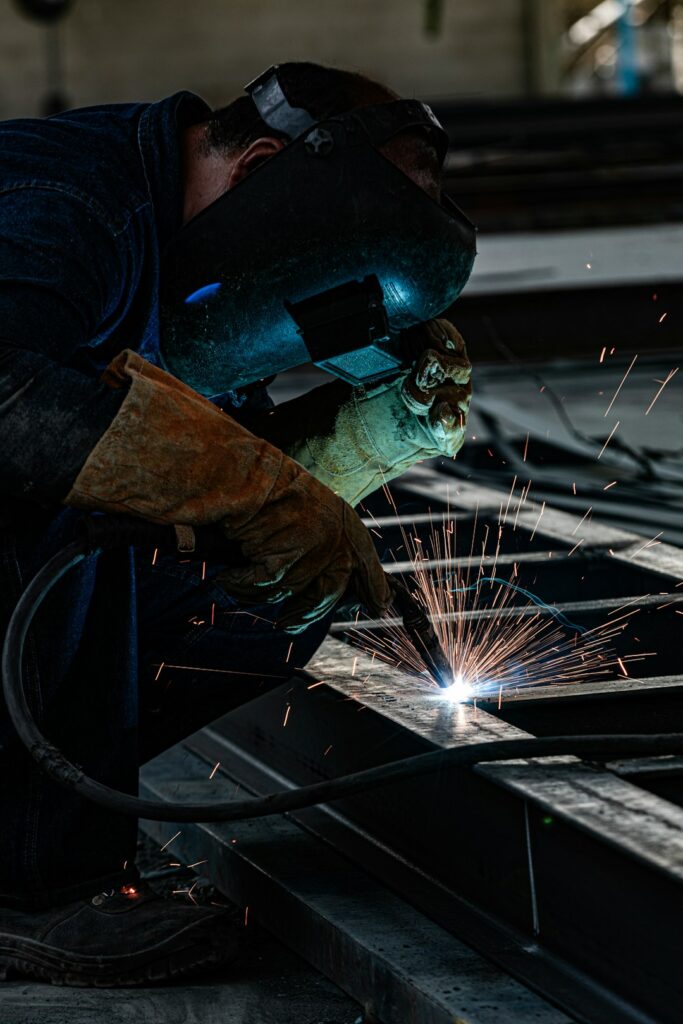
Custom pipe fabrication is the process of measuring, cutting, shaping, joining, and preparing pipe assemblies for a specific mechanical construction project. Instead of bringing loose sections of pipe to a job site and building every connection in place, fabricators produce assemblies that match the project’s drawings, dimensions, materials, and operating requirements.
The finished pieces may include straight pipe sections, elbows, tees, reducers, flanged connections, valve assemblies, supports, and other components. They are commonly used in heating, cooling, plumbing, fire protection, process, and industrial piping systems.
Why is custom pipe fabrication used?
Custom fabrication helps solve the practical problem that buildings rarely provide perfectly open, straight paths for mechanical piping. Pipes must often pass around beams, walls, equipment, electrical systems, doors, and existing utilities.
A fabricated assembly can be designed to fit those conditions before installation begins. This may reduce field cutting, repeated measurements, and adjustments in crowded mechanical rooms or ceilings.
Fabrication is especially useful when a project includes:
- Long piping runs
- Repetitive pipe assemblies
- Tight mechanical rooms
- Boiler or chiller connections
- Hydronic heating and cooling systems
- Complex commercial plumbing layouts
- Industrial or process piping
- Replacement piping in an existing building
For a home or small building, limited pipe cutting and assembly may happen on site. Larger mechanical construction projects usually benefit from preparing at least some components in a controlled fabrication area.
What does the fabrication process involve?
The work begins with project information, such as mechanical drawings, equipment connection dimensions, pipe specifications, and field measurements. The fabricator determines how each assembly should be divided into manageable sections and how the pieces will be installed.
A typical process may include:
1. Reviewing drawings and measurements
Pipe routes, elevations, connection points, materials, and required clearances are examined before cutting begins.
2. Selecting materials
The pipe may be carbon steel, stainless steel, copper, plastic, ductile iron, or another approved material. The correct choice depends on pressure, temperature, fluid type, corrosion exposure, and code requirements.
3. Cutting and preparing pipe
Pipe is cut to length, then cleaned, beveled, threaded, grooved, or otherwise prepared for joining.
4. Assembling components
Fittings, flanges, valves, strainers, unions, and other parts are positioned according to the design.
5. Joining the sections
Connections may be welded, brazed, soldered, threaded, grooved, flanged, solvent-welded, or mechanically joined, depending on the system.
6. Inspecting and testing
Assemblies may be checked for dimensions, alignment, weld quality, cleanliness, pressure integrity, and proper identification.
7. Preparing for delivery and installation
Completed sections are labeled, protected, and organized so they can be placed in the correct location at the job site.
Not every pipe assembly is fully completed in the fabrication area. Some connections must remain open so the sections can be transported, lifted, adjusted, or connected to equipment in the building.
How is fabrication different from pipe installation?
Pipe fabrication creates the components. Pipe installation places and connects those components within the building.
Fabrication generally happens before the pipe reaches its final location. Installation includes setting pipe supports, lifting sections into position, connecting field joints, allowing for movement, insulating piping, and coordinating with other trades.
The distinction matters because an assembly can be accurately fabricated but still require careful field installation. A wall may be slightly out of position, equipment may arrive with different connection dimensions, or existing conditions may differ from older drawings.
Good planning accounts for these possibilities by including access points, adjustable connections, and field-verification steps.
What systems commonly use fabricated pipe?
Hydronic piping is one of the most common applications. These systems circulate heated or chilled water through boilers, pumps, heat exchangers, air-handling equipment, radiators, and other terminal units.
In Rochester, cold winters make dependable heating systems particularly significant. Large buildings may contain extensive heating-water piping, steam systems, condensate return piping, or domestic hot-water circulation loops. Each system requires materials and joining methods suited to its temperature and pressure conditions.
Fabricated piping may also be used for:
- Natural gas and fuel systems where permitted by applicable codes
- Domestic water distribution
- Sanitary and storm drainage
- Fire sprinkler mains
- Refrigeration and cooling equipment
- Compressed air
- Industrial fluids
- Boiler rooms and central utility plants
The same-looking pipe fitting can have very different requirements depending on what flows through the system. Water piping, steam piping, fuel piping, and chemical process piping cannot be treated as interchangeable.

What is spool fabrication?
A pipe spool is a prefabricated section of piping designed to be installed as a unit. It may include several pipe lengths, fittings, flanges, and valves.
Spools are often identified by numbers or tags that correspond to drawings. This helps installers understand where each piece belongs and reduces the chance of placing a similar-looking section in the wrong location.
A spool may be small enough for one person to handle, or large enough to require lifting equipment. Its size is limited not only by the design but also by transportation routes, building access, ceiling height, stairways, and the available installation equipment.
Why do measurements and tolerances matter?
Small dimensional errors can create large installation problems. A pipe that is slightly too long may prevent a flange from lining up. A valve placed too close to a wall may be difficult to operate or maintain. An assembly that fits on paper may not fit through a doorway or around existing equipment.
Fabrication therefore involves tolerances, or acceptable limits of variation. These account for pipe dimensions, fitting depth, welding changes, thermal movement, structural conditions, and field connections.
Accurate measurements are especially valuable in older buildings, where floors may not be level, walls may not be square, and previous renovations may have altered the original layout.
Does fabricated pipe need to be tested?
Many piping systems require testing before they are placed into service. The exact procedure depends on the system, materials, pressure, and applicable code.
Testing may include:
- Hydrostatic pressure testing with water
- Pneumatic testing where appropriate and permitted
- Leak checks
- Visual inspection of welds and joints
- Radiographic or ultrasonic examination for certain welds
- Flushing and cleaning
- Functional checks of valves and equipment connections
Testing is not limited to finding visible leaks. A system may also need to be checked for cleanliness, correct flow direction, proper support, expansion movement, and access for maintenance.
Fuel, gas, refrigeration, steam, and fire protection systems can have additional inspection and documentation requirements.
How do local building requirements affect the work?
Mechanical piping in Rochester must be designed and installed under applicable New York State construction requirements, along with local permit and inspection procedures where required. The exact requirements depend on the building type, system, scope of work, and whether the project involves new construction, renovation, or replacement.
Permits may be required for major mechanical, plumbing, heating, or fuel-related work. Requirements can also apply to pipe supports, insulation, equipment clearances, combustion air, fire protection, pressure testing, and access to shutoff valves.
For residents, the practical lesson is that custom fabrication is not simply a matter of cutting pipe to a convenient length. The assembly must be suitable for its intended service and coordinated with the building’s approved design.
What should property owners understand?
Custom pipe fabrication is mostly hidden after a mechanical system is completed, but it affects how reliably that system operates. Properly planned assemblies can make installation more orderly and maintenance more manageable.
Property owners should expect the work to involve drawings, measurements, material specifications, inspections, and testing—not just pipe and fittings. In occupied buildings, the schedule may also need to account for winter heating, water shutdowns, access restrictions, noise, and protection of finished spaces.
For older properties, replacement piping may require additional investigation because existing systems can contain undocumented changes, corrosion, unusual connections, or materials that are no longer suitable for the intended use.
The central idea is straightforward: custom pipe fabrication turns a general piping design into physical assemblies made for a particular building, system, and installation condition.