

 See My Latest Article on HelloNation
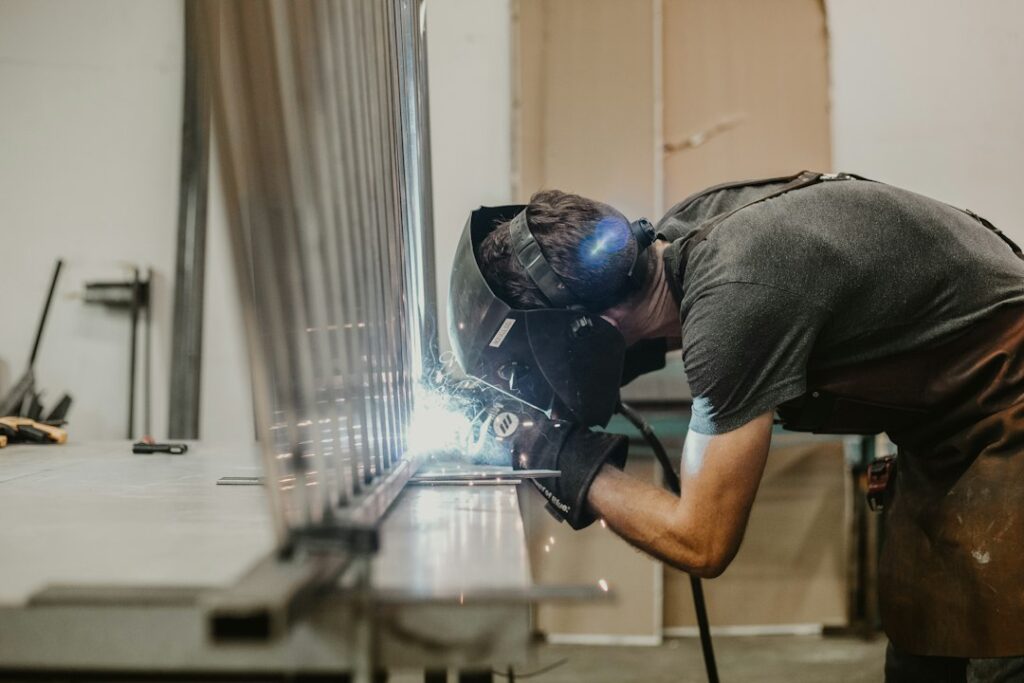
Custom sheet metal fabrication is the process of measuring, cutting, bending, joining, and finishing thin metal to create components for a specific building or mechanical system. Unlike mass-produced parts, fabricated pieces are made to match the dimensions, layout, airflow needs, and installation conditions of a particular project.
In Rochester, NY, this work is closely connected with heating, ventilation, air-conditioning, plumbing, fire protection, and architectural construction. Properly fabricated metal can help mechanical systems fit crowded spaces, withstand seasonal conditions, and operate with fewer installation problems.
What does custom sheet metal fabrication include?
Custom fabrication covers much more than simply cutting a piece of metal. A typical part may be designed, formed, reinforced, assembled, sealed, and prepared for installation.
Common fabricated components include:
- Rectangular and round HVAC ductwork
- Transitions between different duct sizes or shapes
- Elbows, offsets, reducers, and branch connections
- Equipment curbs and mounting bases
- Access panels and service doors
- Furnace and air-handling equipment connections
- Metal plenums and distribution boxes
- Exhaust hoods and ventilation components
- Flashings, covers, and protective enclosures
- Drain pans and condensate-management parts
The exact item depends on the building. A replacement duct section for an older house may be relatively small, while a commercial air-distribution system may require hundreds of individually numbered pieces.
Why is custom fabrication needed instead of standard parts?
Standard components work well when a building follows common dimensions and has plenty of installation space. Many real buildings do not.
Older homes may have irregular framing, low-ceiling areas, additions, narrow chases, or mechanical equipment installed during different remodeling periods. Commercial buildings often contain structural beams, electrical systems, plumbing, sprinklers, and other ductwork competing for the same overhead space.
Custom fabrication allows the metal component to account for those conditions. For example, a duct may need to change from rectangular to round, move around a structural obstruction, or connect equipment with openings that do not match common catalog sizes.
A custom piece can also reduce the need for improvised field modifications. Excessive cutting, patching, or reshaping at the job site can create weak seams, poor airflow, and difficult-to-seal joints.
What metals are commonly used?
Galvanized steel is widely used for HVAC ductwork because it is strong, durable, and suitable for many indoor mechanical applications. Its protective zinc coating helps resist ordinary corrosion.
Aluminum may be selected when lower weight or greater corrosion resistance is useful. Stainless steel is commonly used where cleanliness, moisture resistance, chemical exposure, or a finished appearance matters. Copper and other specialty metals may be used for particular architectural or mechanical applications.
Material selection depends on several factors:
- Air temperature and pressure
- Moisture and condensation risk
- Exposure to chemicals or corrosive conditions
- Required strength and reinforcement
- Fire and smoke-control requirements
- Appearance and finish
- Compatibility with insulation, sealants, and fasteners
The thinnest available metal is not automatically the right choice. Larger ducts, higher air pressures, longer spans, and exposed installations may require heavier material or additional reinforcement to prevent vibration and distortion.
How is sheet metal fabricated?
Fabrication begins with drawings, field measurements, equipment information, or a digital model. Dimensions must account for the outside size of the finished part, connection methods, seams, insulation, access for installation, and the direction of airflow.
The metal is then marked or programmed for cutting. Fabrication shops may use shears, computer-controlled cutting equipment, brakes, rollers, punches, and forming tools. These machines create accurate bends and repeatable dimensions, while skilled workers inspect the parts and assemble them.
Common joining methods include:
- Pittsburgh or snap-lock seams
- Cleats and flanged connections
- Screws, rivets, and other mechanical fasteners
- Spot welding or continuous welding
- Soldering or brazing for selected applications
- Approved tapes, mastics, or sealants

The finished component may be labeled so installers can identify its location and sequence. This is especially useful on larger projects where many pieces look similar but are not interchangeable.
How does custom ductwork affect heating and cooling?
Duct shape, size, transitions, and joint quality influence how air moves through a building. A poorly sized or sharply restricted duct can increase resistance, create noise, reduce delivered airflow, and place additional strain on fans or air-handling equipment.
Well-fabricated ductwork does not guarantee a perfectly balanced system, because performance also depends on equipment selection, system design, insulation, dampers, registers, and installation. However, accurate fabrication gives the system a better physical foundation.
Sealing is also important. Leaky joints allow conditioned air to escape into attics, wall cavities, crawlspaces, or ceilings. In Rochester’s cold heating season, air leakage into unconditioned areas can contribute to energy waste and condensation concerns. Ducts located outside conditioned space generally need appropriate insulation and a continuous air barrier.
Is custom sheet metal fabrication used only for new construction?
No. It is frequently used for repairs, replacements, renovations, and equipment upgrades.
Examples include replacing a damaged section of duct, adapting older ductwork to a new furnace or air handler, adding a return-air connection, or creating a transition for equipment with different dimensions. In older buildings, custom pieces are often necessary because existing components may no longer match current equipment or may have been altered over time.
Renovation work requires careful attention to hidden conditions. A drawing may not show every obstruction inside a ceiling or wall cavity. Field measurements, photographs, and coordination with other trades help reduce surprises during installation.
What should property owners look for in fabricated ductwork?
Visible ductwork should appear reasonably straight, supported, and free of major dents or open seams. Connections should be mechanically secure, and joints should be sealed with materials appropriate for duct systems rather than ordinary household tape.
Other useful questions concern:
- Whether the duct dimensions match the design
- Whether insulation is required in the installation location
- Whether access panels remain reachable
- Whether fire-rated walls or floors are properly penetrated
- Whether the system has been protected from construction debris
- Whether exposed metal may experience condensation
- Whether unusual noise or vibration appears after startup
A metal duct can look solid while still having airflow problems. Whistling, rattling, disconnected insulation, excessive vibration, and rooms that consistently receive too little air may indicate design, installation, balancing, or sealing issues.
Why does local climate matter?
Seasonal temperature swings create practical demands on building systems. Heating equipment may operate for long periods during cold weather, while summer humidity can increase the possibility of condensation on improperly insulated or poorly sealed ductwork.
Older housing and mixed-age commercial buildings also make adaptability valuable. A fabricated component that fits the actual structure can be more effective than forcing a standard part into a space that was never designed for it.
Custom sheet metal fabrication is therefore both a manufacturing process and a coordination skill. Its purpose is to create durable, accurately sized components that fit the building, connect properly with mechanical equipment, and support safe and efficient system operation.