

 See My Latest Article on HelloNation
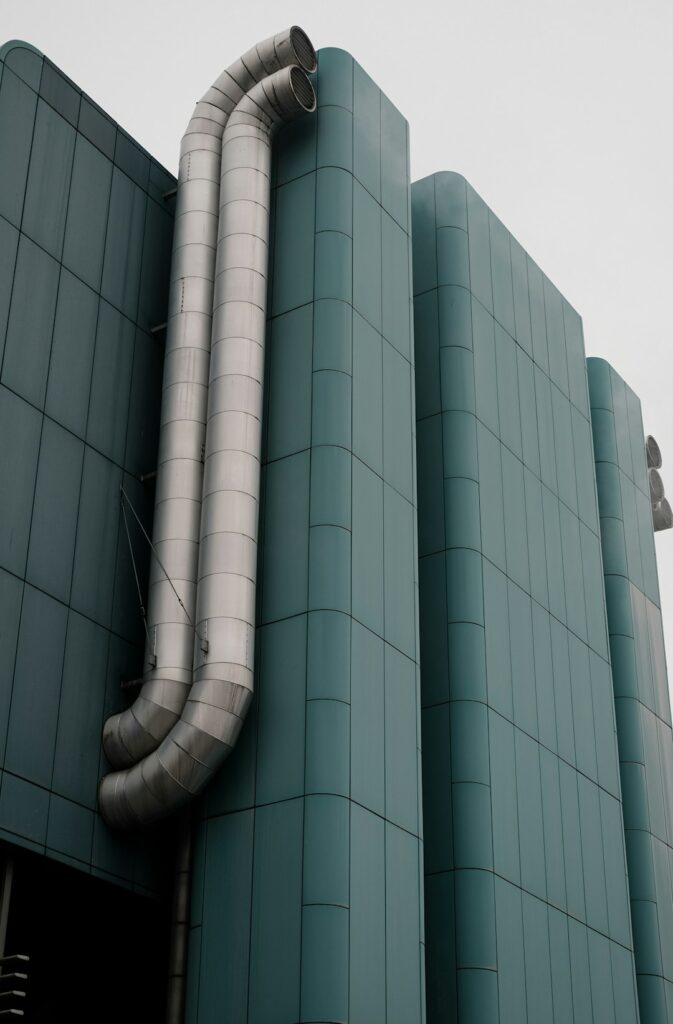
Welded ductwork is used when an air-handling or exhaust system must withstand demanding conditions such as high heat, corrosive fumes, abrasive dust, grease, pressure, or strict leakage requirements. Unlike ordinary snap-lock or mechanically joined duct, welded duct has seams and connections fused together to create a stronger, more continuous assembly.
For Rochester, NY buildings, welded ductwork is more commonly associated with industrial facilities, commercial kitchens, laboratories, manufacturing areas, and specialized exhaust systems than with ordinary residential heating and cooling. The right choice depends on what the duct is carrying, how hot it becomes, how much pressure it experiences, and how much leakage can be tolerated.
What is welded ductwork?
Welded ductwork is metal duct fabricated with welded longitudinal seams, joints, fittings, reinforcement, or connections. Welding may be used throughout the duct system or only at selected areas that experience unusual heat, stress, corrosion, or leakage concerns.
Common materials include:
- Carbon steel or black iron
- Stainless steel
- Aluminum in limited applications
- Other specialty metals selected for chemical or temperature resistance
The weld itself is only one part of the design. Thickness, reinforcement, access doors, hangers, supports, expansion allowances, cleanouts, fittings, and the welding method all affect performance.
Welded construction should not be confused with a duct system that merely has a few welded supports. A fully welded duct system is designed as a durable pressure boundary, often for industrial exhaust or process air rather than ordinary comfort ventilation.
Is welded ductwork used in regular home HVAC systems?
Usually, no. Most residential supply and return ductwork is made from galvanized sheet metal with mechanically joined seams, sealants, cleats, drives, screws, or other standard connection methods. These systems are generally suitable for the temperatures, pressures, and air quality found in homes.
Welded ductwork may appear in a residence or small building when there is a special condition, such as:
- A high-temperature appliance exhaust system
- A custom grease or solid-fuel exhaust arrangement
- A corrosive environment
- A compact area requiring unusually durable metal construction
- A system designed for a particular fire or process hazard
The presence of welded seams does not automatically make ductwork safer or better for every application. It can add strength and reduce leakage, but it also increases fabrication demands and may complicate field modifications.
When is welded ductwork preferred?
Welding becomes useful when ordinary mechanical joints may not provide enough durability or tightness. The most common situations involve industrial exhaust, high heat, contamination, or hazardous materials.
High-temperature exhaust
Welded ductwork is often selected for hot air, combustion-related exhaust, furnaces, ovens, kilns, heat-treatment equipment, and other processes that produce elevated temperatures.
Heat causes metal to expand and contract. A duct system exposed to repeated temperature changes must be designed with appropriate clearances, supports, expansion joints, and material thickness. Welding can provide a strong continuous joint, but it does not eliminate thermal movement. A rigidly welded system that lacks expansion planning can develop distortion, cracking, or stress at supports and connected equipment.
For hot exhaust, insulation, refractory lining, water cooling, or air dilution may also be necessary. The duct material and weld design must be selected for the actual operating temperature, not simply the normal room temperature.
Corrosive fumes and moisture
Laboratories, plating operations, chemical processes, battery-related work, and certain manufacturing activities can produce fumes that attack ordinary steel. Condensation can make the problem worse, particularly when humid exhaust cools inside a duct.
Stainless steel or another corrosion-resistant material may be welded to create a smooth, sealed interior with fewer crevices where moisture and residue can collect. However, welding can affect corrosion resistance in some metals if the joint is not properly fabricated, cleaned, or finished.
The material must match the contaminant. Stainless steel is not resistant to every chemical, and a welded seam cannot compensate for an unsuitable metal choice.
Grease and commercial kitchen exhaust
Kitchen exhaust systems that carry grease-laden air are often built from welded steel or other approved construction because grease can accumulate inside the duct and create a serious fire hazard.
A kitchen exhaust duct must be accessible for inspection and cleaning. Welded construction can reduce openings and leakage points, but the system still requires proper clearances, fire-rated shaft or enclosure arrangements where applicable, access panels, exhaust fan compatibility, and regular cleaning based on the level of cooking activity.
This is one reason kitchen exhaust ductwork should not be treated like ordinary comfort-air ductwork.
Combustible dust and industrial particles
Wood dust, metal dust, plastic particles, grain dust, and other combustible materials can create fire or explosion hazards when conveyed through an exhaust system. In these settings, duct construction must be considered together with airflow velocity, grounding and bonding, spark control, dust collection, access for cleaning, and explosion protection.
Welded joints may be selected to limit leakage, reduce internal ledges, and withstand industrial service. They do not, by themselves, prevent a dust explosion or make a system compliant with every applicable safety requirement.
The hazard depends on the material, concentration, particle size, process equipment, and system layout. Industrial exhaust design may involve fire and building code requirements in addition to mechanical standards.
Does welded ductwork reduce air leakage?
It can, especially when the duct has continuous welded seams and carefully fabricated joints. Fewer mechanical joints may reduce the number of potential leakage points.
However, leakage can still occur at:
- Access doors
- Flexible connectors
- Fan connections
- Expansion joints
- Dampers
- Inspection openings
- Poorly finished welds
- Cracked or distorted sections

A welded duct system still needs inspection and, when required, leakage testing. A smooth-looking weld is not proof that the entire system is airtight. Pressure class, operating temperature, vibration, and connection details all influence long-term performance.
How does Rochester’s climate affect the decision?
Seasonal temperature swings and cold winter conditions can affect exhaust ductwork, especially where warm, moist, or contaminated air passes through unheated spaces. If the duct surface falls below the exhaust air’s dew point, condensation may form inside the duct. That moisture can accelerate corrosion, damage insulation, and allow liquid contaminants to collect.
Designers may address this through insulation, heat tracing, drainage, material selection, controlled makeup air, or maintaining suitable operating temperatures. Roof-mounted and exterior duct sections also need attention to weather exposure, snow, wind, flashing, and support conditions.
These issues matter more for process exhaust and specialty systems than for ordinary residential supply ducts.
What are the disadvantages of welded ductwork?
Welded ductwork is durable, but it is not automatically the most practical choice. Common disadvantages include:
- Higher fabrication cost and longer shop time
- More difficult field alterations
- Need for qualified welding and inspection
- Potential distortion from heat during fabrication
- Greater weight than light-gauge duct
- More demanding support and structural requirements
- Possible corrosion at improperly finished weld areas
- Increased difficulty accessing concealed sections for cleaning or repair
A welded system also requires careful coordination with fans, filters, dampers, roof penetrations, fire protection, and equipment connections. A strong duct can still perform poorly if the fan cannot overcome system resistance or if access for maintenance was overlooked.
Does welded ductwork always need to be used for safety?
No. Welding is one construction method, not a universal safety requirement. Some systems are safely built with listed or approved mechanically joined ductwork, while others require welded construction because of temperature, fire, corrosion, pressure, or process hazards.
The deciding factors include the air or material being conveyed, the equipment producing it, the duct pressure, the temperature range, the installation location, and the governing mechanical and fire requirements. In hazardous exhaust systems, design review and code compliance are especially important because an incorrect material or joint can allow leaks, residue buildup, or unsafe heat transfer.
For area property owners, the practical question is not simply whether ductwork is welded. It is whether the construction method, material, access, supports, insulation, and safety features match the system’s actual duty.